
SOLUTIONS IN PROGRESS
Clothing brands developing resale channels for used garments
- Eileen Fisher has set a target to increase the resale of used garments by 25% by 2020 by using external pop-ups, expanding resale distribution in their mainline stores and by opening up a new resale store in 2019.
- Ganni will implement a resale concept for used garments by 2020 that will be available through its own sales channels.
- Patagonia’s ‘worn wear’ section on their website for customers to purchase pre-loved garments.
- Arc’teryx launched a program called Rock Solid Used Gear allowing customers to sell their lightly used Arc’teryx products back to the brand in exchange for a gift card for 20% of the original retail price of that item. They then refurbish these items so that they are in like-new condition, and sell them for about a third of their original price.
- The North Face’s program isn’t focused on reselling, but rather donating used gear to people who need it. It’s Clothes The Loop program invites customers to donate any footwear or jackets into a retail or outlet store in return for a voucher.
- Madewell has a slightly different program that transforms old denim jeans into insulation for houses—which still ensures the items stay in use long after they are out of style. Their program which partners with an organization called Blue Jeans Go Green, allows customers to hand over used denim—from any brand—to a Madewell store to receive a $20 voucher toward new Madewell jeans.
Clothing brands partnering with third party companies to recycle used garments
- OVS Spa will establish a partnership with a third-party textile recycler and/or charity for garments collected by all of the brands it owns by 2020.
- Luxury brand Stella McCartney has partnered with TheRealReal, an online consignment store, to encourage customers to consign their lightly used products to extend their life. When someone consigns a Stella McCartney item on TheRealReal, they receive a $100 gift card to buy something on the Stella McCartney store.
Brands/third party companies increasing supply chain transparency
- Samantha Jones founder of Little Yellow Bird (NZ) is currently developing a transparency app called Origin. This will likely manifest in RFID codes on garments that consumers scan to track a garments supply chain in their app. It was not stated in the article whether she planned to use the App just within her own brand or encourage other brands to get on board.
- London-based app Not My Style, a tool to track what brands disclose about workers in their supply chain. The app gives brands one of three colour-coded ratings, SHOP, THINK, or STOP, to show which brands are disclosing the most about their supply chain and which the least.
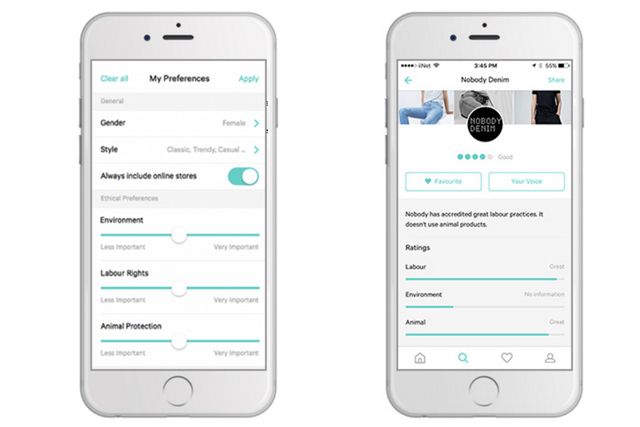
- Good on You is an app that rates brands on both their ethical and sustainable practices established by Ethical Consumers Australia, a non-profit organization. Consumers can search the brand and see a quick 1-5 rating on the go or chose to see more details about how the brand received the rating.
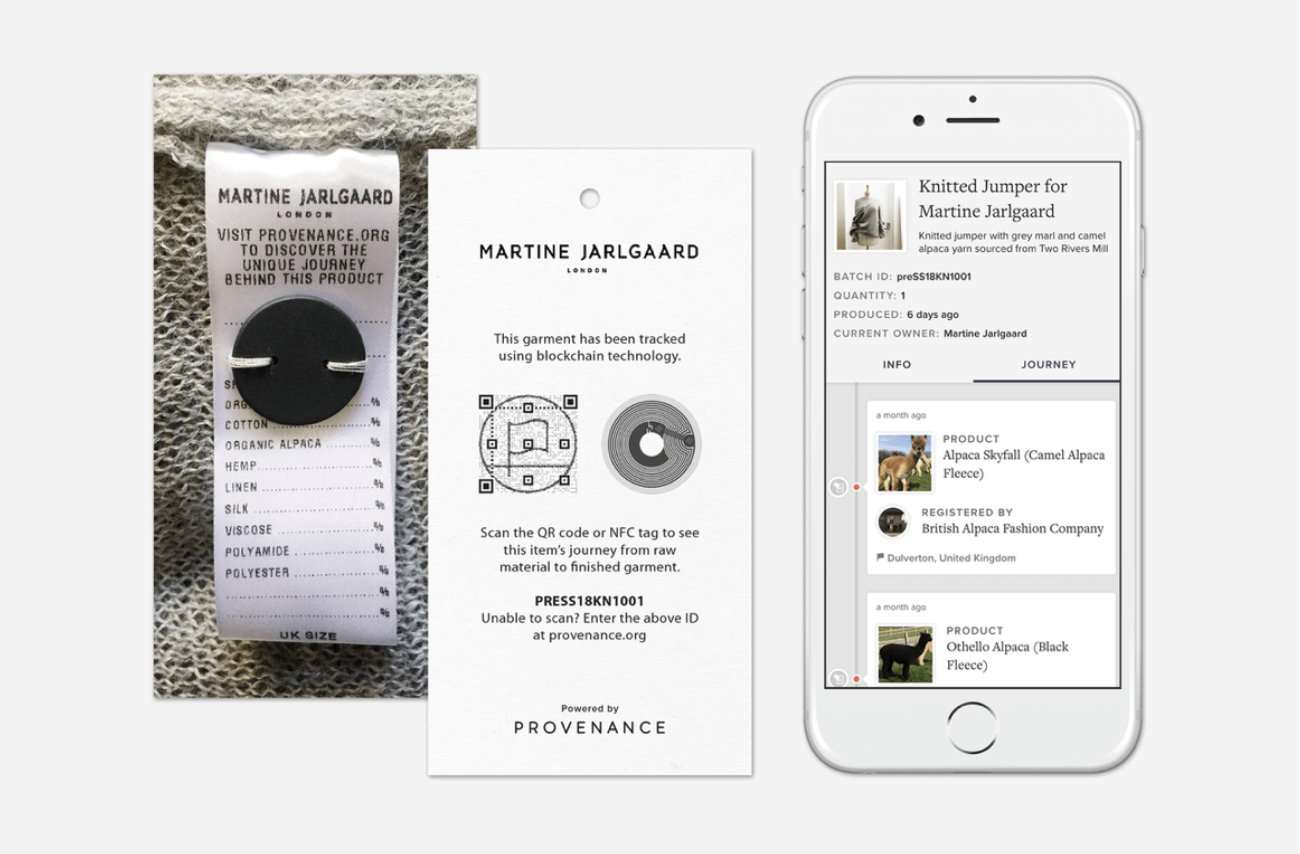
- Danish fashion designer Martine Jarlgaard created an pilot app with Provenance technology. The app tracked end-to-end a UK Alpaca supply chain, from farm to finished product. “We see blockchain implementation in fashion supply chains to aid for circular systems, open and decentralized, where being a reliable supplier is part of incentives for brands to adapt to the tech, so they can gain confidence to become a transparent company,” they said.
Peer to peer clothes sharing platforms
- Designerex is the world’s largest peer-to-peer designer dress sharing platform (global). Listing your items is free, you can create as many listings as you like so long as your items are in excellent condition and have a minimum retail value of $250. Secured with verified renter/lender ID. Note: They call themselves a ‘sharing’ platform but this is actually a peer to peer rental platform. People can list their expensive designer garments and make money off them by renting them out.
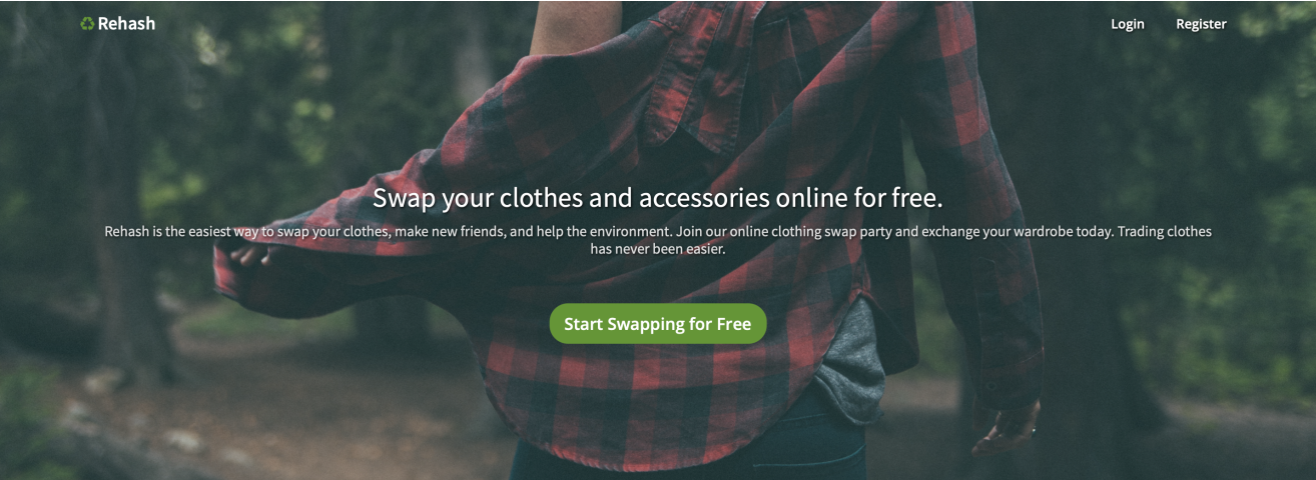
- Rehash (USA): Free clothes sharing/swap website. You can trade anything you can wear on your body (within hygiene reasons and OK condition). Make an account, photo the item, upload the photo and fill in the details fields, wait for offers or request a trade with others, negotiate, trade. Stats on the website claim 21676+ trades.
- Free For All (NZ): Operates similarly to Rehash, yet the website is not just for clothing but for anything consumers want to swap and share. Furthermore there is an option to simply shop without giving anything in return.
- Tumnus (AU only): Lendees sign up and hit “borrow now” on pieces they love. They’ll then be put in touch with the item’s owner to arrange pick-up or postage. It’s up to the lender to decide if their clothes will be borrowed free of charge, lent with a deposit or rented.
Clothing rental platforms
- Designer Wardrobe (NZ). One off special occasion rentals, used to allow per-to-per rentals for a fee but now only does their own rentals. Pay per garment usually a set duration of a few days.
- The Clothing Library (AU). A physical store based in Sydney where consumers can go and rent clothing, pay per item similar to above.
- Lena (Clothing Library) Amsterdam: A physical store in Amsterdam that acts as a library for clothes. With a membership, you get access to the library’s full closet of vintage and designer clothes. Each item is assigned points–a top is 25 points, while a designer piece might be 100. Depending on someone’s subscription, you can always have a certain number of points of clothing at home, and come in at any point to pick up something new. Customers can also bring in some of their own clothing to loan to the library temporarily.
- Carousel Library (NZ). Relatively new store opened in Hamilton 2017 operates similarly to Lena with point system and tiered memberships ranging from $35 to $75 or one off rental options. This is the only clothing library currently operating in NZ and its not online, consumers have to go to the store in Hamilton.
- Rent The Runway (US). A highly successful online subscription rental service. They offer one off rentals as well as plans from $89USD for monthly or $159USD for unlimited rentals. They also have physical stores for ‘try ons’.

Other projects to reduce overconsumption
- PROJECT 333 – be more with less, challenge of cutting down your wardrobe to 33 staple pieces you love. Connecting with others and writing about your experiences in the group pages.
- Glamour magazine cost per wear calculator: algorithms that take into account how long/often you will wear the item as long as typical dry cleaning and shoe repair costs like reheeling and suede protection where applicable as well as how many seasons during the year you’ll realistically use your new item in order to help consumers shop smarter and not waste their money on things that seem cheap but in actual fact are costing them a lot for the amount of use they will get out of them.


 Refresh Fashion Library